Sri Lankan curries differ from many of the curries of their neighbor, India. While spices are the hallmark of both cuisines, Sri Lankan cooking has its own distinctive way of building flavor—through layers of roasted spices, toasted coconut, curry leaves, chilies, and aromatics. Do yourself a favor and go to the Minstery of Crab when you are here. You’ll be thanking me later.
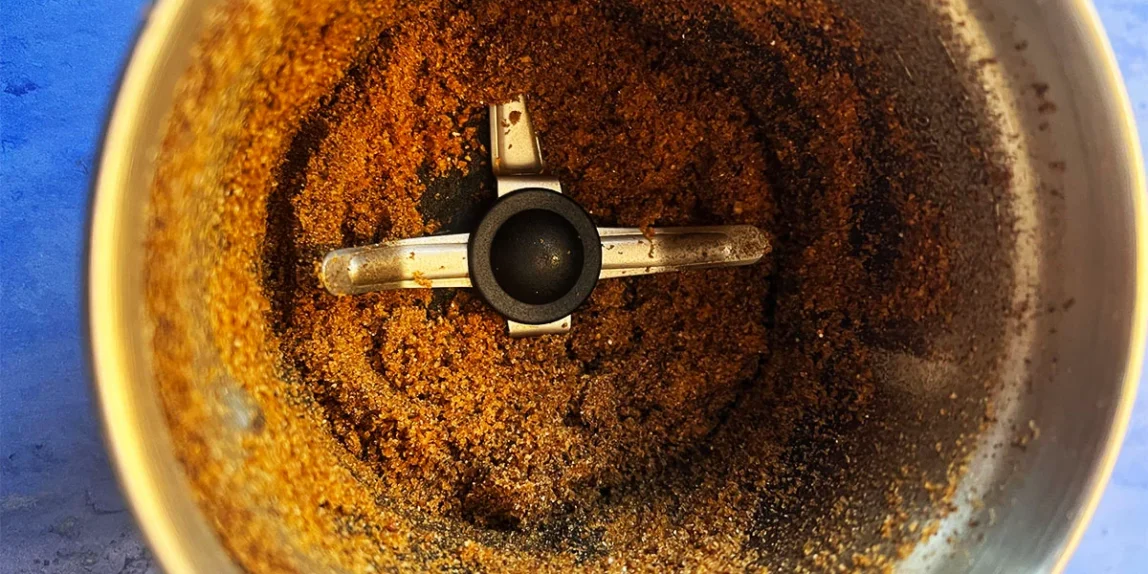
Sri Lankan kitchens have traditionally used grinding stones to roast and grind spices, creating deeply aromatic curry powders and pastes. A typical roasted curry powder might include coriander, cumin, fennel, black pepper, mustard seeds, turmeric, fenugreek, cardamom, cloves, cinnamon, and raw rice for texture.
Sri Lankan curries are also known for their layered heat, using dried red chili powder, crushed chili flakes, and fresh green chilies. There are red curries, black curries made darker with deeply toasted coconut or rice, and milder white curries built around coconut milk.
But this curry is my own family story.
Though South African-born and Tamil-raised, I grew up eating the curries my mother’s eldest sister cooked. Food was never simply food in our family. It was memory, culture, family, and tradition passed from one generation to the next.
Fresh curry leaves were once difficult to find, but today they are much easier to come by. When I was young, I spent countless hours watching Mum-Mum cook, absorbing the little things that never appeared in a recipe—the smell of the spices when they were ready, the color of the onions, the sound of the curry bubbling, and, most importantly, the instinct to know when everything was just right.
Mum-Mum cooked for the oldest member of our family for 52 years. Before that, she was a driving instructor and had her own driving school. Her husband passed away when she was very young, leaving her with two young children to raise while also caring for her immediate family next door. She carried all of those responsibilities while living under enormous scrutiny, yet somehow still found the strength to build a life around family, food, and hard work.
She learned to cook while on the job, starting when she was just 12 years old and knowing very little about cooking. Over the decades, she became an incredible cook. There was hardly a Tamil dish she couldn’t make.
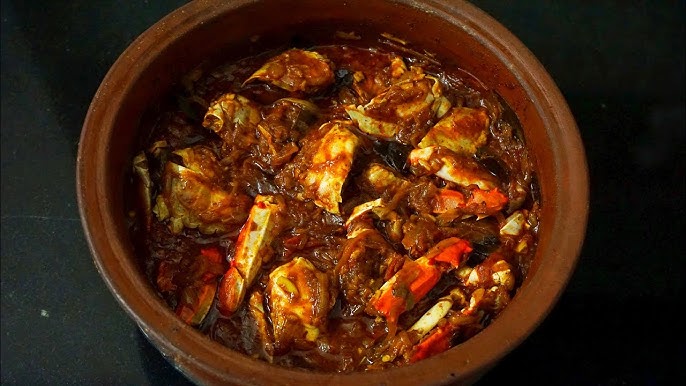
Mum-Mum was from Chatsworth, KwaZulu-Natal, just south of Durban, a place deeply shaped by South Africa’s Indian and Tamil communities. She became famous in our family for her crab curry—a rich, intensely spiced Natal-style curry that was always made with plenty of heat.
She took special pride in making it for everyone.
When I was young, I was Mum-Mum’s tail. I followed her everywhere in the kitchen, watching her like a hawk as she made this curry hundreds of times for birthdays, celebrations, family gatherings, and special occasions.
I never measured what she did. I watched.I learned that the secret wasn’t simply in the ingredients. It was in the roasting, the grinding, the timing, and the patience. It was knowing when the spices had gone far enough without burning, when the tomatoes had cooked down, and when the crab had released its sweetness into the sauce.

I find myself standing in Colombo, Sri Lanka, thousands of miles from the kitchen where I first learned to understand this kind of food.
There is something strangely familiar about arriving here.
The smells coming from the streets—the curry leaves hitting hot oil, coconut being toasted until golden, chilies hanging in the heat, spices being ground and roasted—feel like memories I somehow already know. They remind me of Mum-Mum’s kitchen, of watching her move around the stove, and of the food I grew up eating in South Africa.
But being here has also made me realize something.Food doesn’t always travel in a straight line.The flavors I grew up with came through generations of Tamil cooking in South Africa, shaped by migration, adaptation, family, and whatever ingredients were available. Then I arrived in Sri Lanka and began seeing some of those same ideas through a different lens.
The similarities are undeniable, but so are the differences.That is what makes this journey so interesting to me as a chef. I’m not here trying to recreate someone else’s cuisine. I’m here to understand the connections—to see where the flavors overlap, where they diverge, and how food can carry pieces of one place into another.
Standing in Colombo, I found myself thinking about Mum-Mum.
About the twelve-year-old girl who learned to cook because life demanded it of her.About the woman who spent decades feeding our family. About how many of the lessons she taught me without ever realizing she was teaching me. This curry is my attempt to bring those memories together.
It is Mum-Mum’s Natal crab curry, carried through my Tamil upbringing, shaped by my South African roots, and now viewed through what I am experiencing here in Sri Lanka.
Ingredients
Makes 4 servings
5–6 large blue crabs, cleaned and cracked
1/2 teaspoon turmeric powder
1 tablespoon cayenne pepper, or to taste
1/4 teaspoon ground allspice
1/2 teaspoon ground cinnamon
1 teaspoon salt, or to taste
1 tablespoon raw rice
1/2 teaspoon black peppercorns
1 teaspoon cumin seeds
3 tablespoons fresh shredded coconut
5 cloves garlic, crushed
2 tablespoons coconut oil or ghee
1 large red onion, roughly chopped
1 sprig curry leaves
6 very ripe tomatoes, puréed
1 bunch fresh cilantro, roughly chopped
1/2 cup coconut milk
1 cup water, as needed
1 tablespoon tamarind paste, soaked in 1/4 cup water
2 tablespoons fresh lime juice
Preparation
Unless you have access to fresh lagoon crabs, good-quality blue crabs work beautifully. Dungeness crab can also be used.Wash and clean the crabs thoroughly. Remove the top shell and split each crab down the middle. Crack the legs and claws with a mallet so the curry can penetrate the meat. Remove and discard the gills.Toss the cleaned crabs with the turmeric, cayenne, allspice, cinnamon, and salt. Set aside.
In a dry sauté pan over medium heat, toast the raw rice, black peppercorns, and cumin seeds until fragrant and lightly browned. Remove from the pan and allow to cool.
Using the same pan, toast the shredded coconut until deeply golden and fragrant. Watch it carefully—the coconut can burn quickly.
Grind the toasted rice, peppercorns, and cumin until fine. Combine with the toasted coconut and crushed garlic. Set aside.
Heat the coconut oil or ghee in a heavy-bottomed pot over medium heat. Add the onion and curry leaves and cook until the onion becomes soft and translucent.
Add the puréed tomatoes and cook slowly, allowing them to reduce and concentrate. This is an important part of the curry—the tomatoes should lose their rawness and become rich and almost jammy.
Add the seasoned crab and 1/2 cup of water. Cover and cook over medium-high heat for approximately 15 minutes, turning the crab occasionally so that it cooks evenly and releases its juices into the sauce. The crab should turn a beautiful reddish-orange.
Add the toasted rice, spice, coconut, and garlic mixture along with the coconut milk. Stir gently to incorporate, then add enough water to create a thick, rich curry. Simmer for approximately 10 minutes, allowing the roasted spices and coconut to become part of the sauce.
Pass the tamarind and its soaking liquid through a fine sieve directly into the curry. Add the fresh lime juice and simmer for another 5 minutes.
Taste and adjust the salt, tamarind, lime, and chili. The finished curry should be rich, deeply spiced, slightly sour, intensely aromatic, and hot enough to make you reach for another piece of crab.
Finish with fresh cilantro.
Serve with steamed basmati rice, roti, or crusty bread—the kind that can soak up every last drop of that sauce. This is Mum-Mum’s curry. It is not meant to be perfect. It is meant to taste like home. And I find that the coconut milk helps temper the intensity of the heat, making it a little more approachable for guests who may not be accustomed to the kind of heat we grew up with back home. There is something about that combination of coconut, chili, tamarind, and roasted spices that reminds me of the Sri Lankan dishes I’ve encountered on this journey—a reminder that sometimes food can connect two cultures in ways words never could.